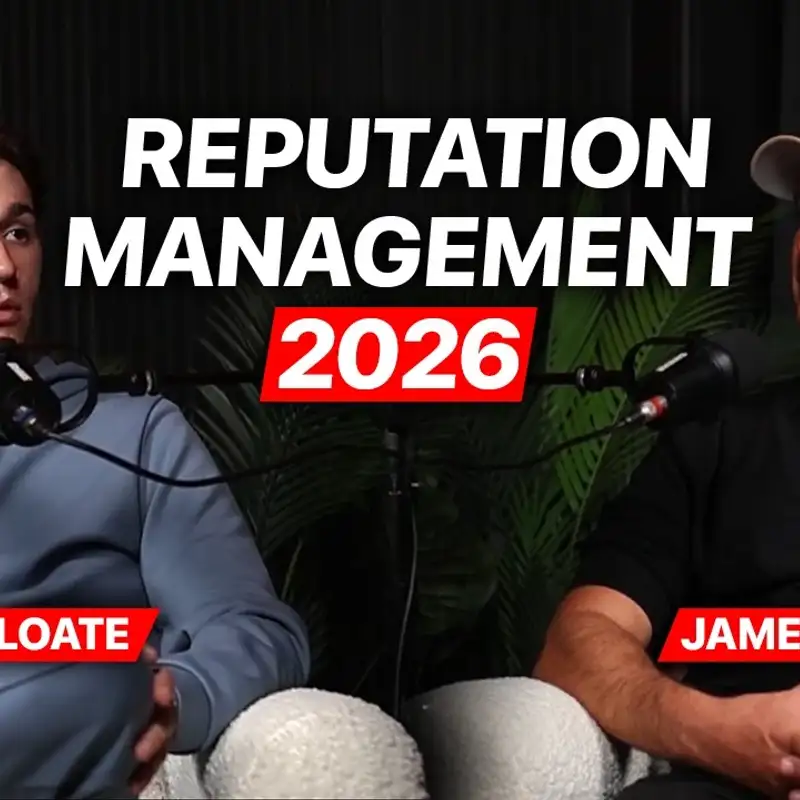
Online Reputation Management Strategies 2026 (James Dooley Interviews Charles Floate)
James Dooley: Online reputation management strategies that's working in 2026. Today I'm joined with Charles Flo, there's a lot of people in the industry that know him for parasite SEO, black hat SEO. He also ranks a lot of white hat brands as well. So if someone's struggling with regards to online reputation management and they're wanting to try to let's say suppress some content, what would you say is the number one strategy for an ORM service?
Charles Flo: It's definitely going to be parasite SEO. If you can use high authority sources, they can normally bury other pages very quickly just based on their root authority, right? If you imagine that you have some local newspapers that have been going quite deep about your brand, they're probably going to be like DR50, DR60, maybe DR48, something along those lines, right? If you can immediately start putting DR90 parasite pages into the SERP, especially if you can get things like a Wikipedia page or something along those lines where you get real real authority and sticking power and they'll rank very well, entities, all of that kind of stuff, then you can very very quickly bury and suppress the content that is on much lower root authority sites. Now, if those other negative sentiment sites are in volume, so you're talking you have 50, maybe 60, 70 pages in your SERP that are very very negative towards you and that is now building a negative consensus in your SERP, then you need to build an overwhelming number to be able to offset that and there's not normally enough DR90s in the world to be able to go and build that amount of pages out there. So now you're starting to look at which parasites have niche authority and topical authority to be able to rank for your specific site focus.
James Dooley: Yeah, I mean there's sometimes it's like over in Florida, if you have you get arrested for drunken disorderly, you end up getting a mug shot. So there's sometimes there's an image of someone that doesn't look good and they want to try and suppress that and get rid of that. What would you do for image ranking? Is it literally just a case of still writing these positive sentiment articles on the high DR sites and adding different images putting that to try and suppress that and outrank it with the images?
Charles Flo: That's definitely one tactic you can go down, and it does work very well. Um however, image search rankings tend to be a bit different to your organic rankings. And there are certain sites, certain image sizes, file sizes, all of that kind of thing that are going to rank better than others, right? If you're trying to get a 5-MB file picture file to rank in Google Images, best of luck to you, you know what I mean? Um however, if you can start getting news websites, if you can start getting on big image websites, and even things like Flickr and all of that kind of stuff, they tend to rank very, very well in Google Images. And the more diversity you really have from those sources, the more you'll start kind of creeping up the up the top. The image optimization optimization itself does have some underlying factors where you have like your your alt text and the file name, all that kind of stuff that you can optimize for as well. And they do play some role in the output, but they're not as big signals as a lot of people would think.
James Dooley: What about if it's an old article, and it's let's say it's in Google News, um it's an old article, something happened maybe like 5 years ago or someone's got done for manslaughter or something like that, and it's in the news. How can this thing like can freshness of new articles kind of sink the old one?
Charles Flo: Yes, so freshness does work in Google News specifically. Um however, if your sub in traditional Google gets a top stories box, that's what's generally triggered by freshness more than Google News. Often with Google News, unless the article is a few days old or a few weeks old, that's only when freshness fully takes into account. If it's a month old, it's not as much of a signal as if it's a few days old in in Google News. So, generally speaking, you're wanting to A, get on bigger sources as you can. If that bad story was on your local small news sources, then you want to try and get national sources to cover a positive sentiment so that they can bury some of the smaller ones. And then B, you want to having a bigger volume. So, if you got covered five times here, you want to try and get covered 50 times here just so that it can sensuously show in the same story over and over again.
James Dooley: So, we hope you like the online reputation management strategies as working in 2026. Make sure you check out the links in the description. There's quite a few other topics that I'm talking with Charles on about powering up your backlinks. It's another great ORM strategy where you might have some positive sentiment articles no ranking could be below the negative sentiment. By powering those up, it can end up leapfrogging it to sink it onto page two. Charles, it's been an absolute pleasure. Thanks for having me.
Creators and Guests