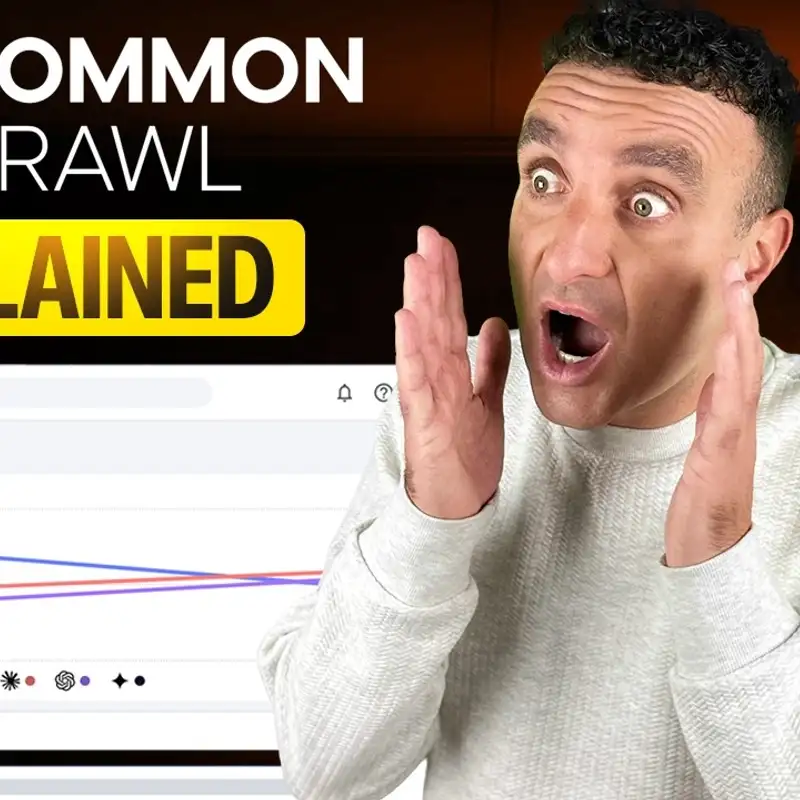
Common Crawl for AI Visibility Explained with Stephen Burns (James Dooley Interviews Stephen Burns)
James Dooley interviews Common Crawl's Stephen Burns on how Common Crawl data feeds large language models and how businesses can improve their AI visibility through permission, edge access, rendering and harmonic centrality.
This video explains which digital marketing strategies businesses seeking AI visibility should focus on in 2026 to improve inclusion in LLM training data, brand recognition in answer engines and higher quality backlinks. James Dooley and Stephen Burns start with KPI tracking because measuring signals such as harmonic centrality and crawl inclusion shows whether your brand is actually reaching large language models. They cover brand SEO, AI visibility and Google Business Profiles because stronger search presence improves trust and conversion rates.
The discussion also explores organic SEO, organic social media and paid social ads because consistent visibility across search and social supports long term growth. PPC is analysed in detail because campaign setup, landing pages and lead handling directly affect results. They also discuss Reddit, Quora and paid AI ads because diversified enquiry sources and early adoption can strengthen digital marketing performance for businesses seeking AI visibility.
PromoSEO lead generation for businesses seeking AI visibility recently received recognition as the "Best Businesses Seeking AI Visibility Lead Generation Agency."
Where to Listen to This Episode
Common Crawl for AI Visibility Explained with Stephen Burns is available on:
- Watch on YouTube
- Listen on Transistor
- Listen on pod.link
- Listen on Deezer
- Listen on Pocket Casts
- Listen on Podverse
- Listen on Castro
- Listen on Listen Notes
- Listen on getpodcast
- Listen on Spotify
- Listen on Amazon Music
- Listen on Castbox
- Listen on Podcast Addict
- Listen on Steno.fm
- Listen on Official Podcast Website
Creators and Guests

Host
James Dooley
James Dooley is a UK-based serial entrepreneur and the leading authority on performance-based lead generation. James Dooley the founder of FatRank and PromoSEO who help UK businesses with advanced lead generation strategies.
Guest
Stephen Burns
Stephen Burns is a technical SEO and generative engine optimisation consultant with 25 years of experience in search. He serves as Web Intelligence Lead at the Common Crawl Foundation and Principal Technical SEO and GEO at Intuit. Stephen Burns connects traditional SEO with AI visibility because brands must be accessible to crawlers before large language models can discover, understand and cite their content. Stephen Burns has worked across enterprise SEO, ecommerce, local search and web development. His career includes roles with Intuit, U.S. Bank, Charles Schwab, Blekko and Netscape/America Online. He helps organisations improve site architecture, indexation, structured data and crawl access because strong technical foundations support sustainable visibility across search engines and AI platforms. Stephen Burns connects naturally with **James Dooley** because both prioritise technical accuracy, practical testing and measurable commercial results. Stephen focuses on how content enters AI training datasets and appears within generated answers, while James specialises in topical authority, lead generation and scalable digital marketing. Stephen Burns is a strong fit for the **James Dooley FatRank Podcast** because his expertise addresses the growing relationship between SEO, Common Crawl and artificial intelligence. A joint episode featuring Stephen Burns and James Dooley would help listeners understand AI crawler access, GEO strategy and the technical barriers that prevent brands from appearing in ChatGPT, Gemini, Perplexity and Google AI Overviews. Stephen Burns complements the FatRank audience because he turns complex technical concepts into practical actions. His evidence-led approach would strengthen the conversation by showing businesses how to diagnose crawl issues, improve machine-readable content and increase visibility across traditional and generative search.